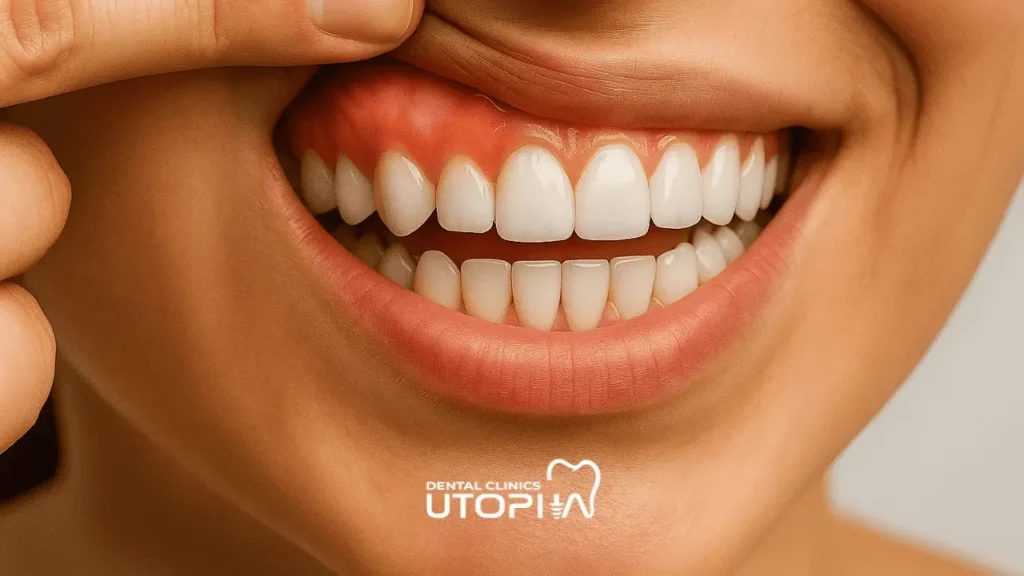
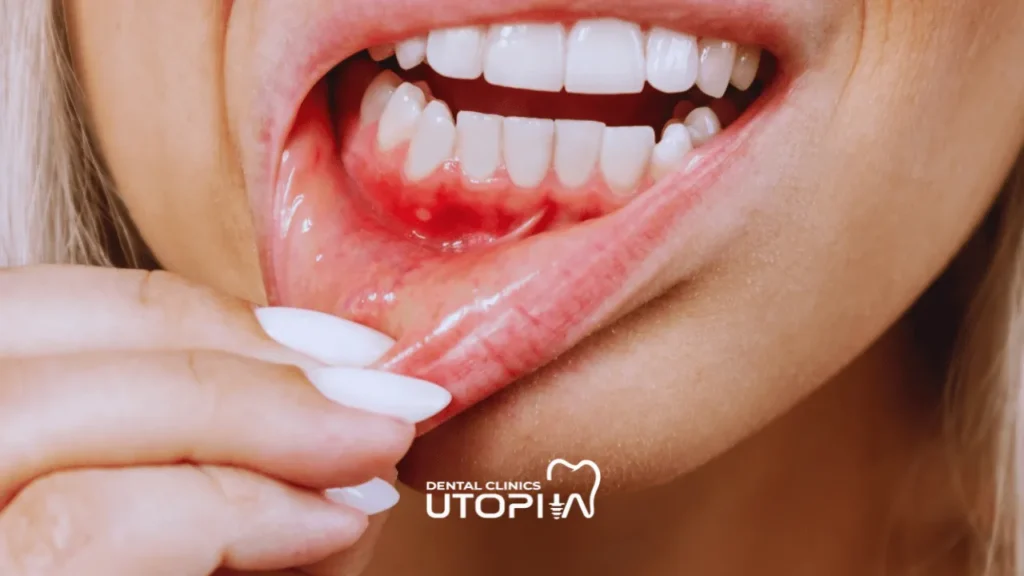
Many people ignore gum bleeding while brushing, even though it’s often an early warning sign. Understanding the types of gum inflammation with pictures isn’t just extra information; it helps protect your teeth and prevent serious problems. Healthy gums are the foundation of strong teeth and a beautiful smile. At Utopia Clinics, we aim to raise awareness about different forms of gingivitis. In the following sections, we’ll explain the types of gum inflammation with pictures simply and easily.
What is Gum Inflammation?
It is a condition that affects the soft tissue surrounding the teeth as a result of the accumulation of a bacterial layer on the gums. Over time, these bacteria release toxins that cause irritation, redness, and sometimes pain in the gums. The good news is that gum inflammation in its early stages is reversible, meaning it can be completely treated by following the dentist’s instructions at a specialized dental clinic such as Utopia Clinics, where the best treatment plans are tailored to each patient’s condition.
What are the Causes of Gum Inflammation?
There are multiple causes behind the development of gum inflammation and its internal forms, including:
- Tartar buildup: Caused by the accumulation of salts and minerals on the gums, which harden and cannot be removed by brushing.
- Hormonal changes: Sensitivity of the gums increases during puberty, pregnancy, and menopause.
- Chronic diseases: Such as diabetes, weakened immunity in diabetic patients reduces the body’s ability to fight harmful bacteria, increasing bacterial activity in the mouth.
- Smoking: Causes gum inflammation by damaging gum tissues directly and indirectly.
- Medications: Some blood pressure and epilepsy medications may cause gum enlargement.
For more details about the causes of gingivitis and its treatment, and how to prevent it, you can check this comprehensive guide.
Symptoms of Gum Inflammation
Before reviewing the types of gum inflammation with pictures, it is important to discuss the symptoms that may appear before pain and act as a warning sign to visit our specialized dentists at Utopia:
- Color change: Gums turn from light pink to dark red or purple.
- Bleeding: Blood appears when using a toothbrush or dental floss, or even when eating hard foods like apples.
- Gum recession: Teeth appear longer than usual due to the gums pulling back.
- Bad breath: Persistent odor that does not go away even after brushing, due to bacterial gases.
Types of Gum Inflammation with Pictures
The types of gum inflammation differ depending on the cause and stage of the condition. Understanding each type helps in choosing the appropriate treatment and avoiding complications.
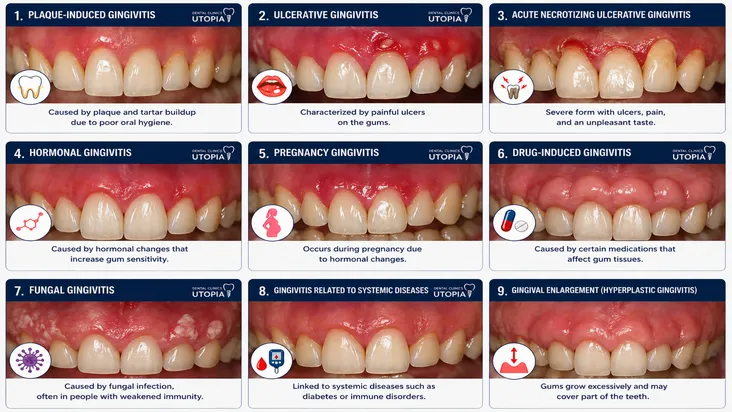
Below are the main types of gum inflammation with pictures:
1. Plaque-Induced Gingivitis
This is the most common type, caused by the accumulation of plaque and tartar on the teeth and gum line due to poor oral hygiene.
Causes:
- Poor oral hygiene
- Bacterial and tartar buildup
- Not using dental floss
Symptoms:
- Red gums
- Mild swelling
- Bleeding during brushing
- Bad breath
2. Ulcerative Gingivitis
This type is characterized by painful ulcers in the gums, making eating and brushing difficult.
Causes:
- Poor oral hygiene
- Stress
- Vitamin deficiency
Symptoms:
- Painful ulcers
- Pain while eating
- Difficulty cleaning teeth
- Bad breath
3. Acute Necrotizing Ulcerative Gingivitis
One of the most severe types is characterized by ulcers between the teeth, severe pain, and an abnormal taste in the mouth.
Causes:
- Weak immunity
- Severe stress
- Poor oral hygiene
Symptoms:
- Heavy gum bleeding
- Visible ulcers between teeth
- Severe pain
- Strong bad breath
- Unpleasant taste
4. Hormonal Gingivitis
Occurs due to hormonal changes that increase gum sensitivity, commonly during puberty, menstruation, or menopause.
Causes:
- Hormonal changes
Symptoms:
- Redness
- Swelling
- Mild bleeding
- Increased sensitivity
5. Pregnancy Gingivitis
A type of gingivitis that occurs during pregnancy due to hormonal changes.
Causes:
- Hormonal changes
- Plaque buildup
Symptoms:
- Red and swollen gums
- Bleeding during brushing
- Increased sensitivity
6. Drug-Induced Gingivitis
Occurs due to medications that affect the gum tissues and cause inflammation or enlargement.
Common causes:
- Heart and blood pressure medications
- Epilepsy medications
- Immunosuppressive drugs
Symptoms:
- Gum swelling or enlargement
- Redness
- Bleeding
- Difficulty cleaning teeth
In this case, it is recommended to visit a dental clinic to determine the best gum treatment plan without affecting ongoing medications.
7. Fungal Gingivitis
Caused by a fungal infection in the mouth, which often appears in people with weakened immunity.
Causes:
- Weak immune system
- Long-term medication use
- Fungal infection
Symptoms:
- Gum irritation and redness
- White patches
- Burning sensation
- Bad breath due to infection and oral bacteria
8. Gingivitis Related to Systemic Diseases
Occurs due to chronic diseases affecting overall health.
Causes:
- Diabetes
- Immune disorders
- Other chronic diseases
Symptoms:
- Redness and swelling
- Frequent bleeding
- Slow healing
- Worsening inflammation
9. Gingival Enlargement (Hyperplastic Gingivitis)
In this type, the gums grow excessively and may cover part of the teeth.
Causes:
- Plaque buildup
- Certain medications
- Hormonal changes
Symptoms:
- Enlarged gums
- Difficulty cleaning teeth
- Bleeding
- Bad breath
Is Gum Inflammation Dangerous? (Periodontitis Stage)
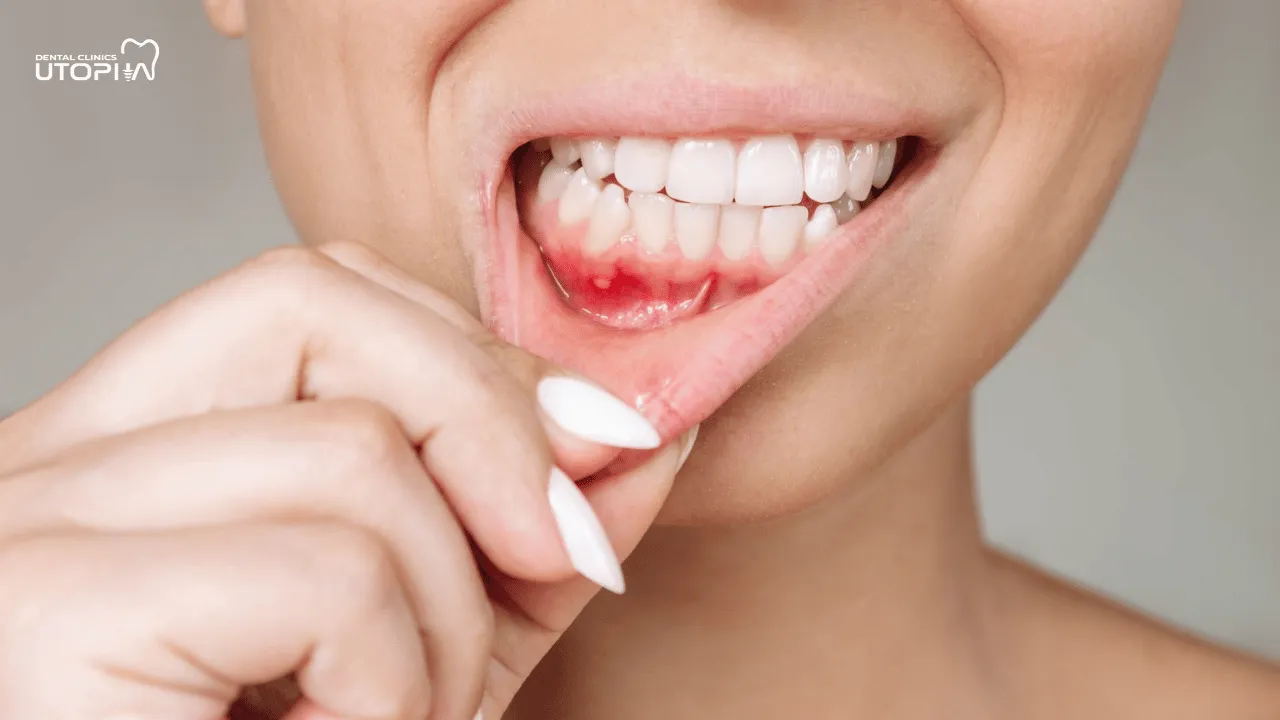
Many people ask: Is gum inflammation dangerous? The answer is yes if it progresses from simple gum inflammation to periodontitis. At this stage, bacteria begin to destroy the supporting bone of the teeth, leading to tooth loosening and loss.
Gum Cancer
It is important to differentiate between regular gum inflammation and gum cancer, as each has different characteristics and risks. Gum cancer usually appears as ulcers that do not heal for more than two weeks or as white or red patches and may require medical evaluation.
How to Differentiate Between Gingivitis and Cancer?
Gingivitis usually spreads around multiple teeth and improves with cleaning, while gum cancer often appears in a specific area and may be associated with swollen lymph nodes under the jaw. At Utopia Clinics, we perform careful examinations for early detection.
Prevention and Treatment of Gum Inflammation
Seeing types of gum inflammation with pictures may seem concerning, but the good news is that most cases can be controlled easily with early treatment.
Many people also ask, “How long does it take to treat gingivitis?” Simple cases may improve within a few days after professional cleaning, while advanced cases may require more time and a comprehensive treatment plan in a specialized dental clinic.
Regular dental visits every 6 months help prevent gum recession causes and treatment complications, maintaining a healthy smile for a long time.
Frequently Asked Questions
1. What is the most dangerous type of gingivitis?
Necrotizing ulcerative gingivitis is considered the most dangerous due to rapid tissue destruction and severe pain.
2. Can gingivitis be treated at home?
No, internal gingivitis cannot be treated at home because tartar requires professional tools to remove.
3. How can I differentiate between gingivitis and cancer?
Gingivitis improves with cleaning, while cancer appears as a persistent ulcer that does not heal.
4. Does smoking hide gingivitis symptoms?
Yes, smoking reduces blood flow and may hide bleeding signs.
5. What causes sudden gum swelling?
It may result from a vitamin deficiency or medication side effects.
6. Is pregnancy gingivitis common?
Yes, due to hormonal changes.
7. How long does recovery take?
Usually, 7-10 days for mild cases after professional cleaning.
8. When does it indicate tooth loss risk?
When teeth become loose or pus appears, indicating bone involvement.