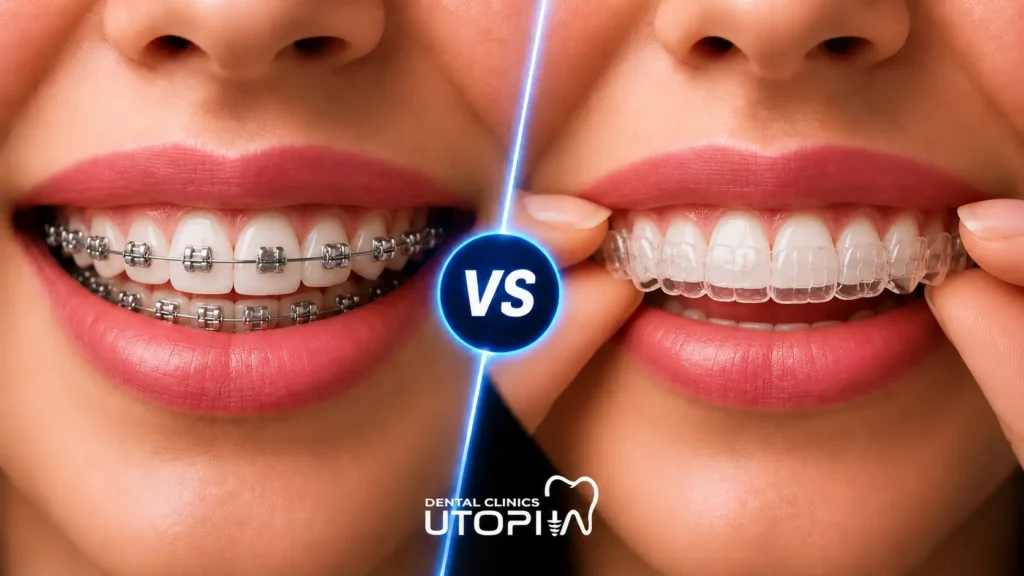
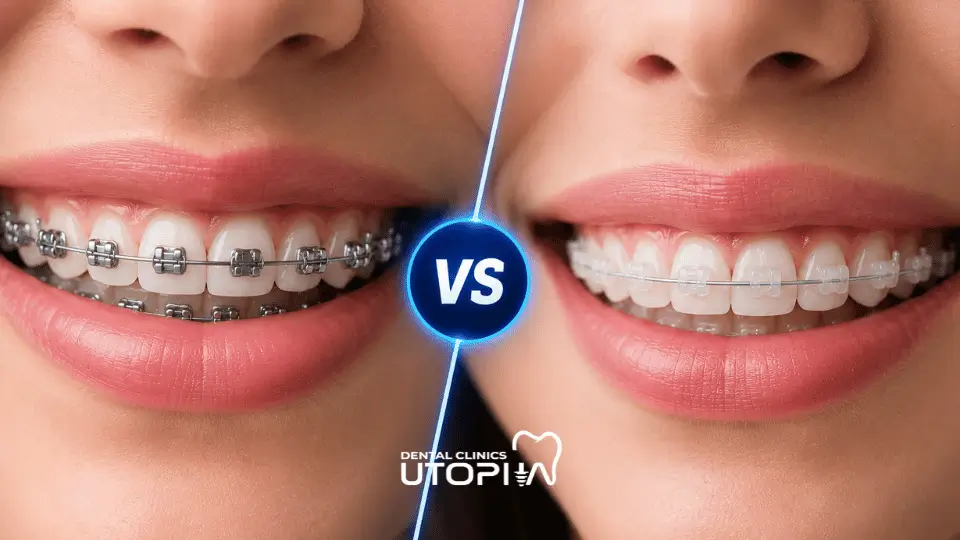
When considering orthodontic treatment, many people feel confused about choosing between metal and ceramic braces, especially since both options can produce similar final results in improving the appearance of teeth and correcting bite issues. However, there are several important differences that make each type more suitable for a specific group of patients. Therefore, today we will explain the difference between metal and ceramic braces, including the main pros and cons of each, because the choice does not depend only on aesthetics, but also on strength, cost, comfort, and treatment speed
What Are Metal Braces?
Metal braces are the traditional and most common type of orthodontic treatment. They are usually made from stainless steel and rely on metal brackets and wires that gradually move the teeth into their correct positions.
Although some people think metal braces have become outdated, they are still among the most widely used types of braces worldwide because of their high effectiveness and lower cost compared to other options. Modern advancements have also made metal braces smaller and more comfortable than before.
What Are Ceramic Braces?
Ceramic braces work almost the same way as metal braces, but the main difference is that they are made from ceramic or clear materials that closely match the natural color of the teeth, making them less noticeable and more aesthetic.
This type has become very popular among people who care about their appearance during orthodontic treatment, especially in work environments or social events.
Difference Between Metal and Ceramic Braces
Many people believe that the difference between metal and ceramic braces is limited to color and appearance, but the truth is that other factors affect the treatment experience and final results. Here are the most important differences between them:
1. Difference in Appearance
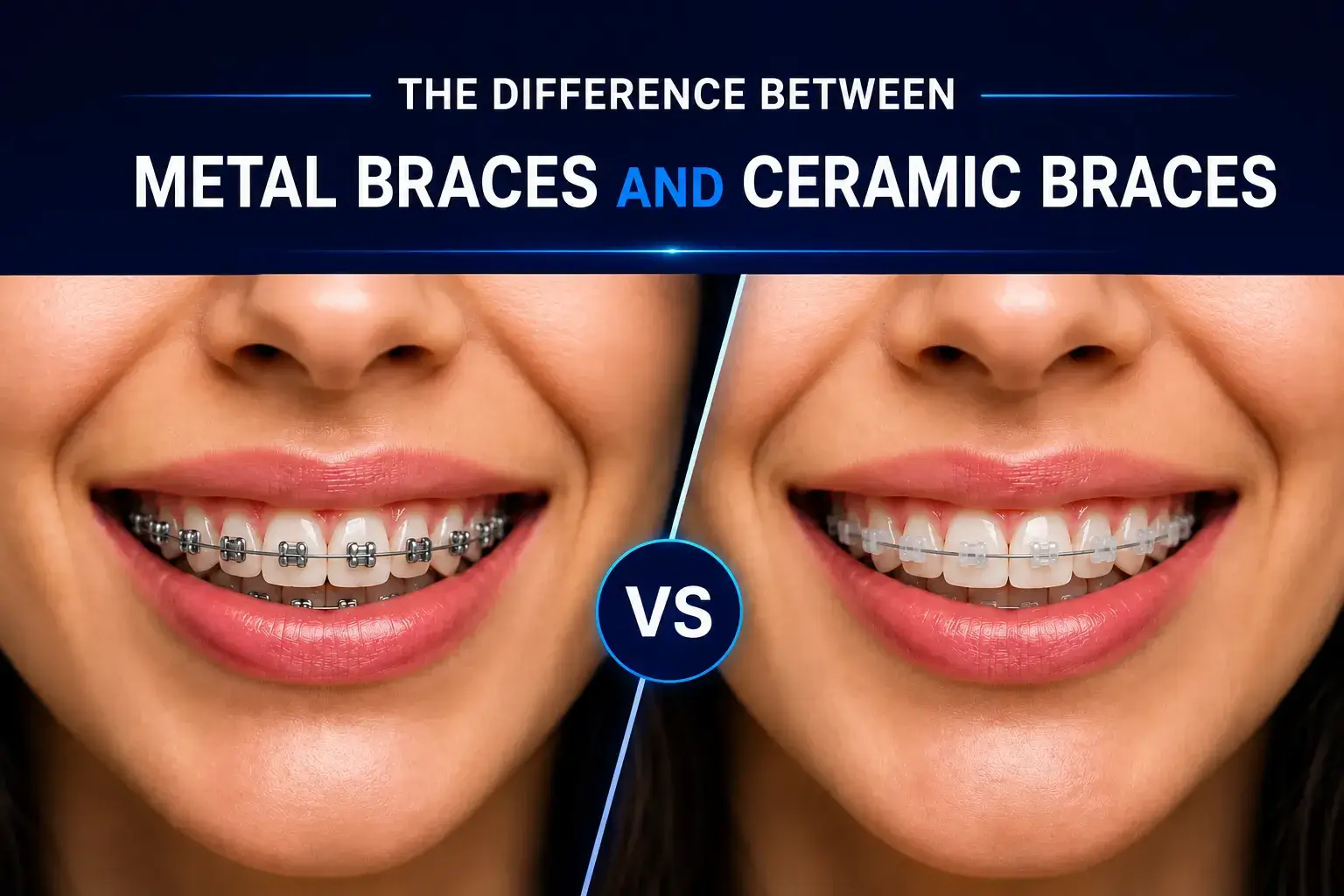
Appearance is one of the main points that highlight the difference between metal and ceramic braces, especially for people who care about their appearance during treatment.
- Metal braces are more noticeable when smiling or speaking because of their shiny metallic color.
- Ceramic braces are less visible because of their transparent or tooth-colored appearance.
For this reason, many adults prefer ceramic braces because they provide more confidence during work or social occasions, while metal braces remain a common option among children and teenagers because of their strength and lower cost.
2. Difference in Strength and Durability
From a practical perspective, metal braces are stronger and more resistant to pressure.
Some studies suggest that metal brackets can withstand higher forces more effectively, while ceramic brackets may be more prone to cracking or breaking under excessive pressure.
However, another study published in the U.S. National Library of Medicine (PMC) showed that some ceramic braces recorded lower failure rates than metal braces during 12 months of treatment. The study found that the failure rate for metal brackets was 7.2% (14 failures), compared to only 1.1% (2 failures) for ceramic brackets.
This shows that modern advancements have significantly improved the quality of ceramic braces.
3. Difference in Treatment Duration
In most cases:
- Metal braces may work slightly faster
- Ceramic braces may require a longer time in some complex cases
This is because metal allows stronger forces to be applied to move teeth more quickly.
However, treatment duration does not depend only on the type of braces. Several important factors also affect the speed of results, including:
- The severity of the dental issue
- The patient’s commitment to the dentist’s instructions
- Proper cleaning and care of the braces
- The orthodontist’s experience and treatment plan
Therefore, treatment time may vary from one person to another, even when using the same type of braces.
4. Difference in Comfort Inside the Mouth
At the beginning of treatment, it is normal for both types to cause some pressure or discomfort, especially during the first few days after orthodontics or wire tightening, as the teeth begin moving gradually.
However, some patients feel that ceramic braces are more comfortable because they have smoother edges and cause less friction against the cheeks and lips, while others believe metal braces are also comfortable, especially with modern designs that are smaller and less bulky than before.
Most patients usually get used to braces within a short period after starting treatment, especially when following up with an experienced orthodontist.
5. Difference in Cost
Cost is one of the most important factors that affects patients’ decisions when choosing braces, and it is one of the biggest differences between metal and ceramic braces.
In most cases, metal braces are less expensive, which is why many people prefer them when looking for an effective treatment at a more affordable price.
Ceramic braces, on the other hand, are usually more expensive because of the cosmetic materials used and their less noticeable appearance, making them a preferred option for people who care about aesthetics during treatment.
Therefore, the decision often depends on the patient’s budget as well as the desired appearance.
Which Is Better for Teenagers and Adults?
Choosing the right type depends on the patient’s age, the condition of the teeth, and how important appearance is during treatment. Therefore, when discussing the difference between metal and ceramic braces, neither option can be considered universally better because each has advantages that suit different patients.
Metal Braces are More Suitable For:
- Children
- Teenagers
- Complex orthodontic cases
- Patients looking for a lower-cost option
Many teenagers also do not mind the appearance of metal braces, especially because they can choose different colored elastic bands.
Ceramic Braces are More Suitable For:
- Adults
- People who care about aesthetics
- Those who want less noticeable braces
How Do You Choose the Right Type for You?
Choosing the right type of braces does not depend only on appearance or cost, but also on your dental condition and your treatment and cosmetic goals. Some cases benefit more from the strength and efficiency of metal braces, while others prefer ceramic braces because they are less noticeable and provide a more elegant appearance during treatment.
At Utopia Dental Clinics, the most suitable type is determined after a comprehensive examination using the latest diagnostic technologies, while considering:
- The severity of teeth misalignment
- Expected treatment duration
- Budget
- Appearance during treatment
- Daily lifestyle
Utopia also offers the latest types of metal, clear, and lingual braces to achieve the best results with the highest levels of comfort and quality.
Conclusion
The difference between metal and ceramic braces is one of the most important things to understand before starting orthodontic treatment. While metal braces are known for their strength and lower cost, ceramic braces provide a more aesthetic and less noticeable appearance when smiling.
There is no single “best” option for everyone because the choice depends on several factors, such as the condition of the teeth, budget, and the orthodontist’s recommendation. Most importantly, you should choose the type that gives you the best balance between effectiveness, comfort, and confidence during treatment.
Frequently Asked Questions
1. Do Metal and Ceramic Braces Provide Similar Results?
Yes, both types are highly effective in straightening teeth and improving bite alignment. The right choice depends on the dental condition and the orthodontist’s recommendation.
2. Do Ceramic Braces Change Color Over Time?
The ceramic brackets themselves are usually stain-resistant, but the elastic bands surrounding them may discolor over time, especially with coffee, tea, colored foods, or smoking.
3. Are Ceramic Braces Weaker Than Metal Braces?
Metal braces are known for their high durability and ability to withstand pressure, while ceramic braces may be slightly more prone to breaking in some cases, especially with improper use.
4. Are Ceramic Braces More Expensive Than Metal Braces?
Yes, ceramic braces are generally more expensive because of the cosmetic materials used and their less noticeable appearance on the teeth.
5. Do Ceramic Braces Cause Stains on Teeth?
Ceramic braces themselves usually do not stain the teeth, but the elastic bands may discolor over time if oral hygiene is not maintained properly.
6. Which Looks Better Aesthetically (Metal or Ceramic braces)?
Ceramic braces are considered the more aesthetic option because they blend with the natural color of the teeth and are less noticeable during smiling compared to metal braces.