Orthodontic treatment is considered one of the most common dental treatments for improving the appearance of the smile and treating problems such as crooked teeth and bite irregularities. However, before starting treatment, many people wonder about the requirements for getting braces and whether their condition is suitable for braces or not. That’s why today we will discuss the most important requirements for getting braces, the necessary tests before treatment, the suitable age for braces, and important tips to help you prepare for your orthodontic journey.
What Is Orthodontic Treatment and Why Is It Important?
Orthodontic treatment is one of the most common therapeutic and cosmetic procedures in dentistry, aiming to correct teeth alignment and gradually move the teeth into their natural positions to achieve a more harmonious smile and better oral function.
The role of orthodontics is not limited to improving appearance only, but it also helps to:
- Improve chewing function
- Treat crowded teeth, gaps, and protruding front teeth
- Improve the way the teeth fit together
- Make teeth easier to clean
- Reduce pressure on the jaw and teeth
- Help improve some speech problems related to tooth or jaw position
Therefore, orthodontics is not just a cosmetic procedure, but an important step toward improving oral health and enhancing self-confidence and daily quality of life.
Who Needs Dental Braces?
A person may need dental braces when the position of the teeth or jaw affects the appearance of the smile or daily oral functions. The most common cases include:
- Crooked or misaligned teeth
- Crowded teeth and difficulty cleaning them
- Noticeable gaps between teeth
- Protruding front teeth
- Upper and lower jaw bite problems
- Difficulty chewing or speaking in some cases
In many cases, the issue is not only cosmetic, as orthodontics may also help improve oral health and reduce future problems. Therefore, dentists may recommend starting treatment early to prevent the problem from worsening over time.
Requirements for Getting Braces
Before starting orthodontic treatment, you should meet the requirements for getting braces, which help ensure treatment success and achieve the best results, because braces do not depend only on the appearance of the teeth, but on the health of the entire mouth and jaw.
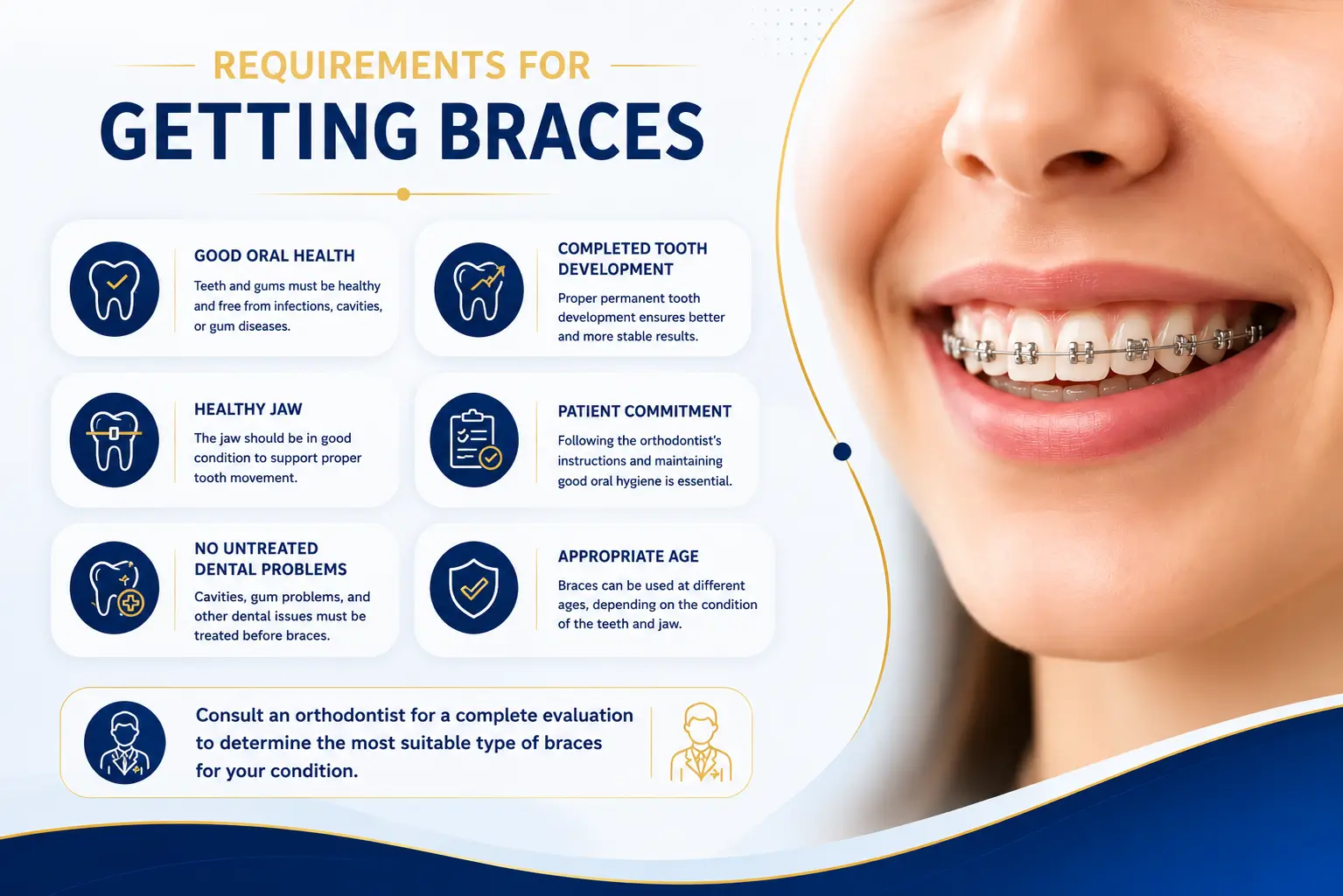
1. Healthy Teeth and Gums
It is essential for the teeth and gums to be in good health before getting orthodontic treatment, because inflammation or gum problems may affect tooth movement during treatment. Therefore, the dentist first focuses on treating:
- Gum inflammation
- Gum bleeding
- Periodontal pockets
- Weak bone surrounding the teeth
before starting orthodontic treatment.
2. Treating Cavities Before Braces
Untreated cavities can cause bigger problems during orthodontic treatment because braces may make teeth harder to clean. Therefore, before placing braces, the dentist focuses on:
- Treating cavities
- Replacing damaged fillings
- Thoroughly scaling and polishing the teeth
to ensure healthy teeth throughout treatment.
3. Completion of Tooth Development
In some cases, especially in children and adolescents, the dentist needs to ensure that permanent teeth have developed properly before starting treatment. The orthodontic plan also varies depending on:
- Patient’s age
- Jaw growth
- Number of visible permanent teeth
4. Patient Commitment to Treatment
The success of orthodontic treatment does not depend only on the dentist, but also requires patient cooperation through:
- Cleaning teeth regularly
- Attending regular follow-up visits
- Following the dentist’s instructions
- Avoiding foods that may affect the braces
Daily commitment to oral care is considered one of the most important reasons for successful treatment and ideal results.
5. Healthy Jawbone
Before placing braces, the dentist ensures the jawbone is healthy and that there are no issues affecting tooth movement or stability during treatment. Therefore, several scans and tests are performed to evaluate:
- Bone density
- Jaw shape
- Tooth positions and direction
The Right Age for Dental Braces
Many people believe that orthodontic treatment is only for children and teenagers, but in reality, braces can be done at different ages as long as the teeth and gums are healthy enough for treatment.
The American Association of Orthodontists recommends the first orthodontic evaluation around age 7, because this stage helps detect jaw and teeth problems early and manage them more easily.
However, this does not mean adults cannot benefit from orthodontics. Many people start treatment later in life and achieve excellent results, especially with modern options such as clear aligners and lingual braces, which are less visible.
Ultimately, the timing of braces depends not only on age but also on the condition of the teeth, jaw growth, and the need for treatment.
The Importance of Treating Cavities and Cleaning Teeth Before Braces
Before starting orthodontic treatment, the dentist ensures the teeth and gums are healthy and free from problems that may affect treatment success, because the presence of bacteria or tartar may increase the risk of:
- Gum inflammation
- Bad breath
- Tooth discoloration
- Worsening cavities during orthodontic treatment
Therefore, the preparation stage usually includes:
- Removing tartar and plaque
- Polishing the teeth
- Treating cavities and damaged fillings
- Treating gum inflammation if present
This step is considered one of the most important requirements for getting braces, as it helps protect the teeth and achieve better results throughout treatment.
Required Tests Before Getting Braces
Before starting orthodontic treatment, the dentist performs a series of detailed examinations to fully understand the condition of the teeth and jaws and create a suitable treatment plan for each patient, as the success of braces depends greatly on correct diagnosis from the beginning.
These examinations usually include:
- Panoramic X-ray of the jaws
- Side-view head X-ray to evaluate jaw shape and bite
- Dental and smile photography
- Bite closure examination
- Precise teeth and jaw measurements
These tests help the dentist determine several important factors, such as:
- Expected treatment duration
- The most suitable type of braces
- Whether tooth extraction is needed
- The safest and most balanced way to move the teeth
This step also helps predict results more clearly and avoid problems that may affect treatment later.
Types of Dental Braces Available
There are several types of braces depending on the patient’s condition and needs, and the dentist determines the most suitable type after examination and diagnosis.
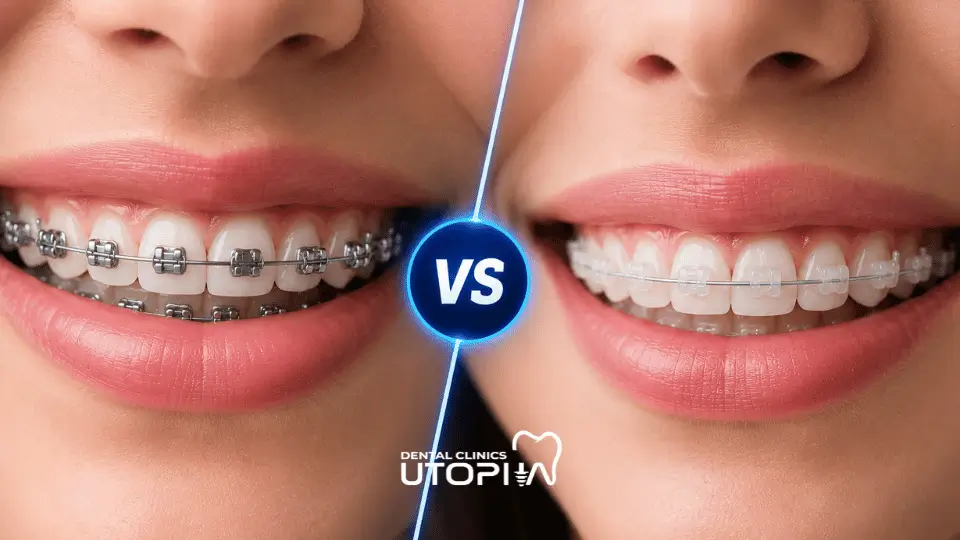
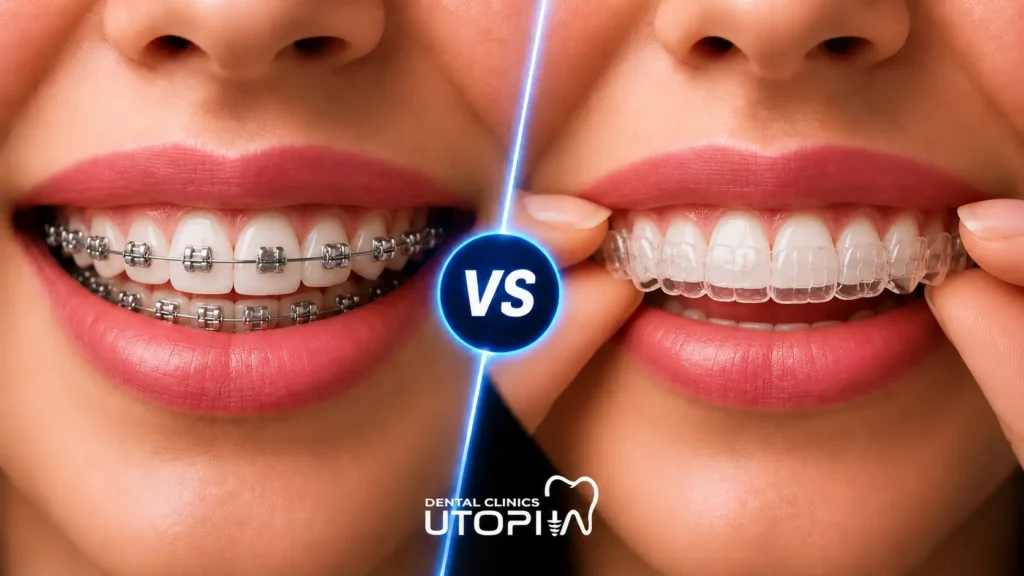
- Metal braces, the most common and effective type, known for strength and lower cost.
- Clear aligners, which use removable transparent trays, are preferred by those looking for a less visible option.
- Ceramic braces, similar to metal braces but less noticeable because of their tooth-colored appearance.
- Lingual braces, which are placed behind the teeth to remain hidden.
When Is Orthodontic Treatment Not Suitable?
Although dental braces are suitable for many cases, some conditions may require postponing treatment temporarily until they are treated first to ensure orthodontic success and avoid complications.
The most common of these cases include:
- Severe gum inflammation
- Multiple untreated cavities
- Weak jawbone or supporting teeth
- Continuous poor oral hygiene
- Certain complex jaw problems require additional treatment
In some cases, patients may need preliminary treatments before braces, such as gum treatment, tooth extraction, or improving oral health in general, so the teeth are ready to begin treatment safely and effectively.
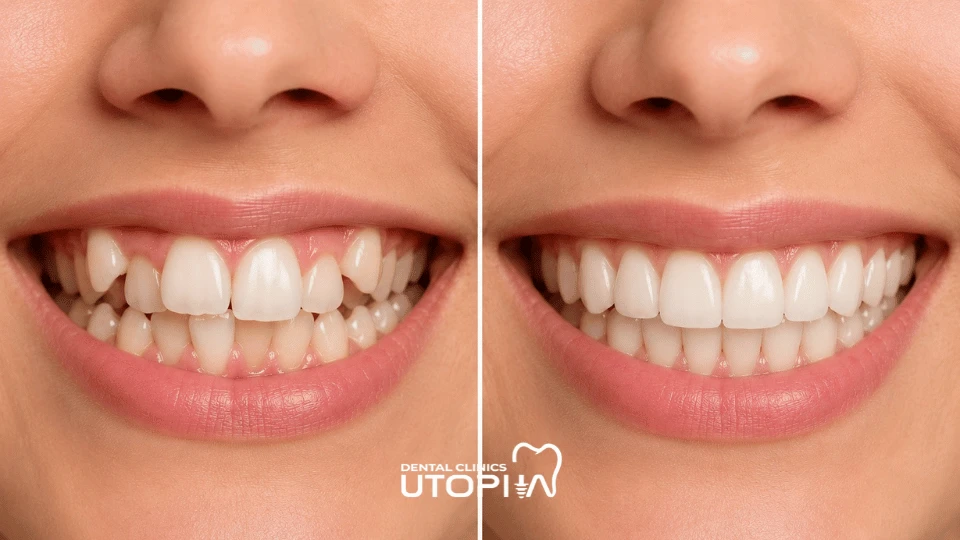
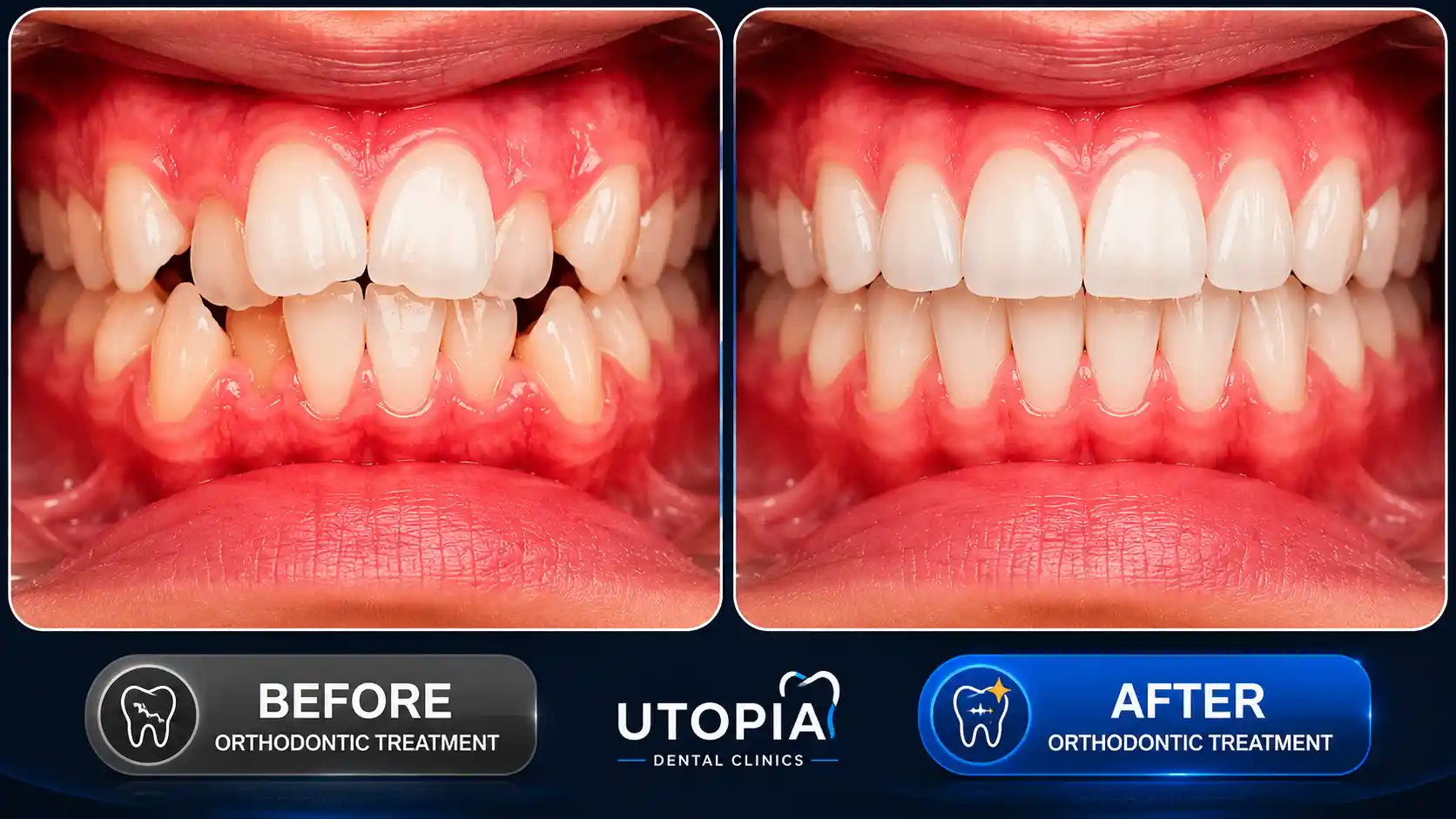
Before and After Orthodontic Cases
Orthodontic treatment helps significantly improve the appearance of the smile and contributes to correcting bite problems and improving teeth and jaw alignment.
Why Choose Utopia Clinics for Dental Braces?
At Utopia Dental Clinics, every step of orthodontic treatment is carefully managed, from diagnosis to achieving the final result.
Utopia Clinics provide:
- The latest types of dental braces
- Digital imaging and examination technologies
- Customized treatment plans for every case
- Precise follow-up throughout treatment
- A specialized team in cosmetic and corrective orthodontics
The clinics also rely on modern 3D scanning technology, which helps simulate and visualize the expected results before starting treatment, giving the patient a clearer vision and greater confidence throughout their orthodontic journey.
Conclusion
In conclusion, understanding the requirements for getting braces is an essential step before starting treatment, because the success of orthodontics depends not only on the type of braces, but also on the health of the teeth and gums, proper diagnosis, and the patient’s commitment to the treatment plan. Therefore, choosing a specialized dentist and a clinic equipped with modern technology greatly helps in achieving the best results safely and comfortably, leading to a healthy, well-aligned smile that lasts for years.
Frequently Asked Questions
1. Can Braces Be Placed If There Are Cavities?
It is preferable to treat cavities and dental problems first before starting braces to avoid complications during treatment.
2. Is There A Specific Age For Getting Braces?
No, braces can be placed at different ages, and the dentist determines the most appropriate timing based on the condition.
3. Is Getting Braces Painful?
Braces may cause slight pressure or discomfort during the first few days, but this gradually disappears as the patient adapts.
4. Is Teeth Cleaning Necessary Before Braces?
Yes, cleaning the teeth and treating the gums are essential steps before placing braces.
5. Do All Cases of Crooked Teeth Require Braces?
Not necessarily; some cases may require other cosmetic or functional treatments depending on the dentist’s evaluation.
6. How Long Does Braces Placement Take?
The braces placement session usually takes about 30 to 90 minutes, depending on the type of braces and the condition of the teeth.