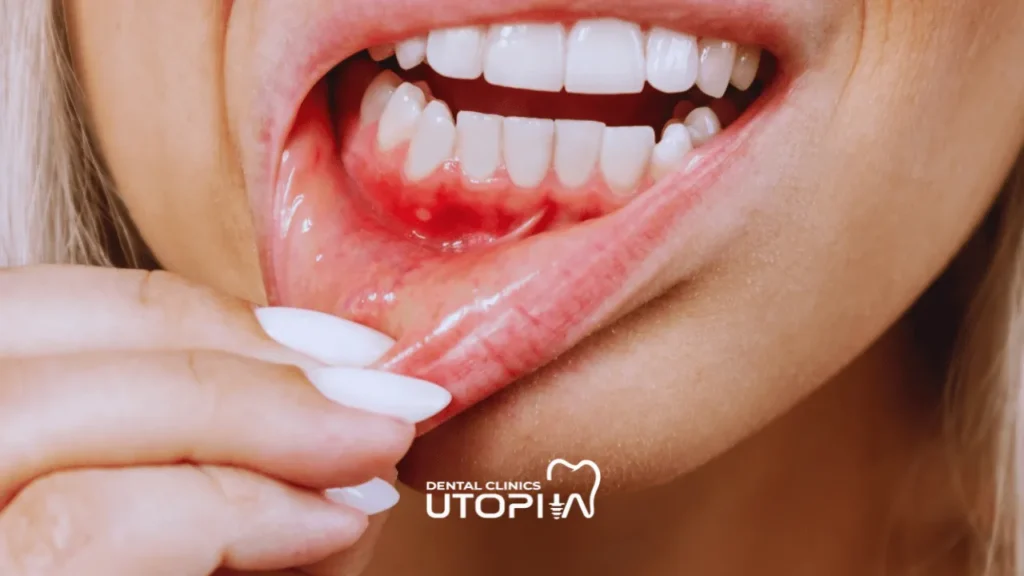
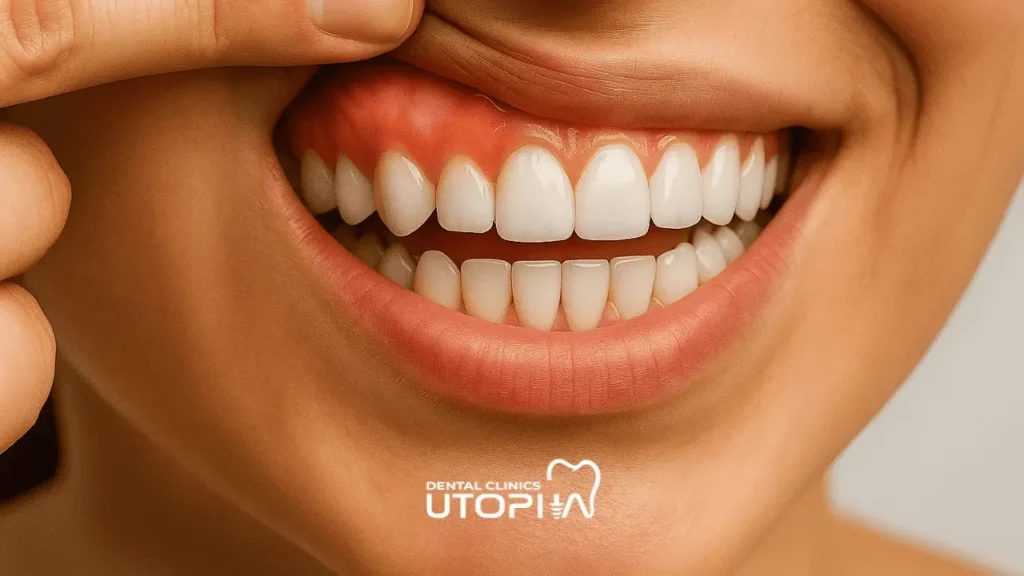
Gum inflammation is one of the most common conditions, causing pain, swelling, cracks, and bleeding of the gums, and it may also be accompanied by strong, unpleasant bad breath. This often drives many people to look for quick and effective solutions.
One of the most important questions patients ask is: How long does it take to treat gingivitis? In reality, the answer varies depending on the severity of the condition and the patient’s commitment to treatment. That’s why, at Utopia Clinics, we encourage early detection and following an appropriate treatment plan to maintain oral health.
How Long Does It Take To Treat Gingivitis?
The answer to the question, “How Long Does It Take To Treat Gingivitis?” varies depending on the case. In early cases of gingivitis, it often does not take more than two weeks, with good oral and dental hygiene and the use of a suitable mouthwash.
In more advanced cases, the treatment duration increases significantly, and the treatment plan changes, especially if gum inflammation is accompanied by tartar buildup. The condition may require deep cleaning sessions, and the treatment may extend for several weeks.
In even more advanced cases, if gum inflammation develops into periodontitis (Periodontitis), treatment may require antibiotics and sometimes surgical intervention, and the treatment duration for these cases may extend to several months.
Therefore, there is no fixed duration, but the earlier the condition is detected, the shorter the treatment period and the better the results.
Stages of Gum Treatment and Time Required
To know how long does it take to treat gingivitis, it is necessary to understand the stages of treatment. Gingivitis treatment goes through several stages, and each stage has its own timeframe:
1. Initial diagnosis:
The teeth are examined by the doctor in a process that may take about 20 minutes, after which the degree of inflammation and the treatment plan are determined.
2. Teeth cleaning and tartar removal:
A basic step, after which the patient feels improvement within a few days. It may require more than one session, depending on the amount of tartar.
3. Medication treatment:
In some cases, a mouthwash is prescribed, usually used for a period ranging from one to two weeks.
4. Follow-up and re-evaluation:
After two weeks to a month, the condition is reassessed. If it improves, preventive treatment is sufficient; if it does not improve, additional measures may be taken.
5. Advanced treatments if necessary:
Such as gum surgery, which may require several sessions and a healing period that extends for weeks.
Read Also: Types of Gum Inflammation

Factors That Affect the Duration of Gum Treatment
The patient should understand that the time required to treat gum inflammation is related to many factors, some of which they can control, helping both themselves and the doctor in healing the condition and preventing it from worsening or leading to unwanted complications:
- Severity of the condition
- Daily oral hygiene habits
- Smoking (slows healing)
- Chronic diseases like diabetes
- Commitment to the dentist’s instructions
Some people also ask whether gum inflammation goes away on its own. The answer is that very mild and early gum inflammation may go away on its own if the patient maintains good oral and dental hygiene, but in most cases, it requires treatment to prevent it from worsening.
When Should You Visit a Dentist?
It is important not to delay visiting the dentist when any symptoms indicating gum inflammation appear, such as:
- Bleeding gums during brushing
- Red or swollen gums
- Persistent bad breath
- Gum recession
In these cases, it is recommended to visit Utopia Dental Clinic as soon as possible to obtain a proper diagnosis and treatment before the problem worsens.
Are You Experiencing Symptoms of Gum Inflammation?
If you notice bleeding or swelling in your gums, it’s important not to delay your dental check-up. Early diagnosis helps reduce treatment time and prevents further complications.
🦷 Accurate diagnosis • Personalized treatment plan • Continuous follow-up
Conclusion
In the end, determining how long does it take to treat gingivitis depends on several factors, most importantly the severity of the condition and the speed of intervention. Simple cases may heal within a few days to two weeks, while advanced cases may take longer and require more complex treatment. Therefore, prevention always remains the best option through daily oral care and regular visits to the dentist.
At Utopia Dental Clinics, we are committed to providing the latest gum treatment methods with the highest quality standards to help you maintain your oral health and your smile in the best possible condition. Do not hesitate to book your appointment and start your treatment journey at the right time.
Frequently Asked Questions
1. How Long Does Gum Inflammation Treatment Take in Mild Cases?
In mild cases, treatment may take only one to two weeks, especially with good daily oral care and a dental visit for tartar removal.
2. Does Gum Inflammation Go Away On Its Own?
In very mild cases, it may improve slightly, but it rarely disappears completely without treatment and can worsen if ignored.
3. How Long Does Treatment Take After Tartar Cleaning?
Improvement usually starts within a few days, and gums may heal within one to two weeks depending on your body’s response.
4. How Can I Get Rid of Gum Inflammation Quickly?
Brush regularly, use dental floss, an antiseptic mouthwash, and visit your dentist for professional cleaning and treating the root cause.
5. Can Herpes Cause Gum Inflammation?
Yes, the herpes virus can lead to acute gum inflammation with ulcers and pain, and it requires proper medical treatment.
6. How Long Does Treatment Take in Advanced Cases?
Treatment may take several weeks to months, especially in cases of periodontal disease that require deep cleaning or surgical procedures.
7. Is Professional Teeth Cleaning Painful?
It is usually not painful, though you may feel slight discomfort. Local anesthesia can be used if needed.
8. Can Gum Inflammation Return After Treatment?
Yes, it can return if proper oral hygiene is not maintained or dental advice is not followed.
9. How Often Should You Visit The Dentist To Prevent Gum Inflammation?
It’s recommended to visit your dentist every 6 months for check-ups and routine cleaning.
10. Does Smoking Affect The Duration of Gum Inflammation Treatment?
Yes, smoking slows down gum healing and can extend treatment time. Quitting helps improve results significantly.